
I typed one sentence and fell off my chair. I'd asked our AI brain to optimise every image on the Marketing Clinic website, so the pages load faster for visitors and for Google. That job used to take three hours. It was done before the kettle boiled.
Our website was a Volkswagen Beetle
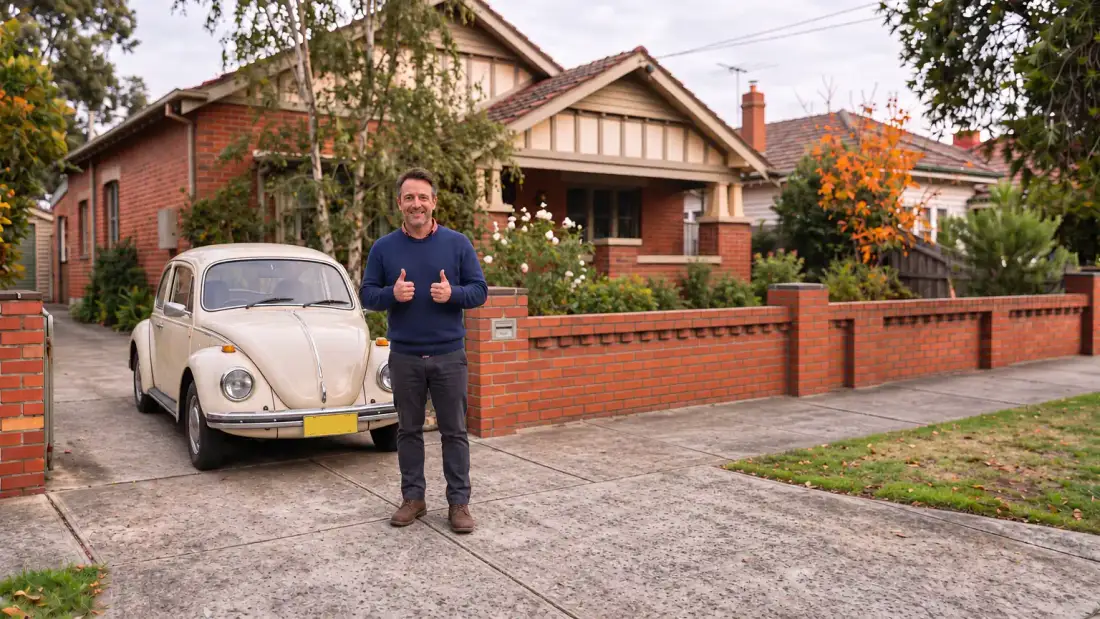
We've spent 14 years building websites, running Google Ads and doing SEO. However, our own website was a Volkswagen Beetle. It worked. It looked okay. It got people from Google to our phone number. But it was built a long time ago, rarely tuned, and it wouldn't win any races.
Most business websites are Beetles, and yours probably is too. It was built once. Someone picked the photos, wrote the pages, pressed publish and sent the final invoice. The homepage still says what the business was that year. The team photo is out of date. Every small change since has meant a quote and a wait, and nobody checks the site's speed, SEO or broken links, because it isn't anyone's job.
You know the feeling. Someone on a call says "I had a look at your website" and you get in first with the apology. You wince a little every time you send a prospect the link. Somewhere along the way you stopped looking at it, because you'd rather not see how far it's slipped.
Then a customer tells you the site was slow on their phone, and the worst part isn't the fix. It's not knowing how many others found that out and never said a word.
Try this before you read on. It takes 30 seconds. Open your homepage on your phone and count to three. If it's still loading, some visitors have already gone. Read the first line out loud. Does it describe the business you run today? Then find the newest thing on the site. If it's more than a few months old, your customers can see that too.
Now do the same test on ours. Refresh this page, or open our homepage on your phone, and count again. It's loaded before you get to one. Impressive, isn't it? That's an AI website, seen from your customer's side.
Your website needs a pit crew
A website shouldn't be judged on how it looked at launch. It should be judged on how much better it is a month later.
That's the whole shift. The old model is a redesign every five years. Build it, leave it, let it go stale, start again. The build was a cost you'd notice. The bigger cost is the years it sits untouched while a competitor keeps tuning theirs.
The new model is a website that never stops getting better. It's tested every week for speed, SEO, broken links and the questions customers are searching for. Then it's upgraded based on what those tests find. That's what an AI website is. There's no big redesign, because it never falls far enough behind to need one.
Your website should be an F1 car. An F1 car gets tuned after every race, and for a website, every week is a race. Plug it into an AI brain, and it gets a pit crew that never stops working on it. A small business website used to take a full agency team. Now it takes an AI brain.
What the pit crew does
That kettle moment was day one. Here's what our brain does to our site now, mostly overnight while nobody's at a desk. SEO and page speed are checked every week, and anything slowing the site down gets flagged and fixed. Every page is checked for the titles, headings, descriptions and internal links Google and AI look for. Every new video, post or article gets proofed, linked to the right pages and added to the site. Everything we've learned about which website problems cost enquiries is now built into the overnight checks. You don't need to know how any of it works. That's the pit crew's job, and they never clock off.
The pit crew keeps the car tuned. Content keeps it fuelled. The brain is wired straight into the site and its own content studio, working to a plan and turning out blog posts aimed at the exact questions your customers type into Google. Every post goes live ready for Google and AI to find. That means more searches you show up for, better pages to send your Google Ads traffic to, and more enquiries coming in.
Getting on the grid takes three steps. The first is the audit, a full inspection that shows where your site is losing speed, rankings and enquiries. The second is the rebuild, done once, with the brain plugged in from day one. The third never ends. The pit crew goes to work, and the site gets tuned every week.
Do nothing, and the website stays the way it was the day it went live, slipping a little further behind every month. The questions customers keep asking go unanswered on your site, so they take them to Google and find someone else's page. In a few years the redesign comes around again, and you start from scratch, again. Meanwhile a competitor whose site gets tuned every week quietly starts showing up in the searches and AI answers where yours used to be, and every month that gap gets harder to close by hand.
Plug it in, and the website stops being a brochure and becomes the centre of your marketing. You send people to the site with pride, because it always shows the business as it is today. And the work that used to take a web developer, a content writer and a social media person working separately now runs as one connected system, getting better every time something new goes out. An F1 car while your competitors drive Beetles.
A calendar reminder pops up on a grey Tuesday morning. "Website redesign, start getting quotes." You set it five years ago, the day the old site went live, because that's what you did with websites.
You read it twice. Then you delete it, because your website hasn't stood still long enough to need one. It got better last week. It'll be better again by Friday. You go back to running the business, and the website keeps up with you.
If you've been putting off the website because it all feels too technical, book a 20-minute call. Bring your last redesign quote. We'll show you a website that means you never need another one.